
High-Speed Progress and More Nuclear Fuel
News Rundown: Summaries for every major nuclear headline

Lots of headlines these past couple weeks for regulatory progression through some of the major milestones for new reactors pursuing the July 4th criticality deadline, and lots of updates in the nuclear fuel industry. Enjoy this weekend’s News Rundown and don’t forget to subscribe and share!


Reactor Development
UK maritime nuclear consortium launched
Multiple countries and businesses are pursuing nuclear propulsion for commercial shipping due to the immense greenhouse gases that are currently emitted by the shipping industry. While it has already been demonstrated by the U.S. Navy submarine and aircraft carrier fleets that marine propulsion using nuclear energy is possible and safe, it does not necessarily transfer over to the commercial industry so easily.
One of the biggest outstanding questions outside of the technical side of things is the issue of countries allowing nuclear-powered ships to dock in their ports. For example, the U.S. Navy already struggles to dock their submarines and aircraft carriers in certain nations due to that nation’s distrust of the U.S. and/or nuclear reactors. It is hard to imagine that a country will now suddenly be willing to host a nuclear-powered vessel that comes from a less experienced program or a less-than-friendly flagged nation. A nuclear powered shipping industry may require some form of international standard.
Readying for Criticality: Final Design Review Completed
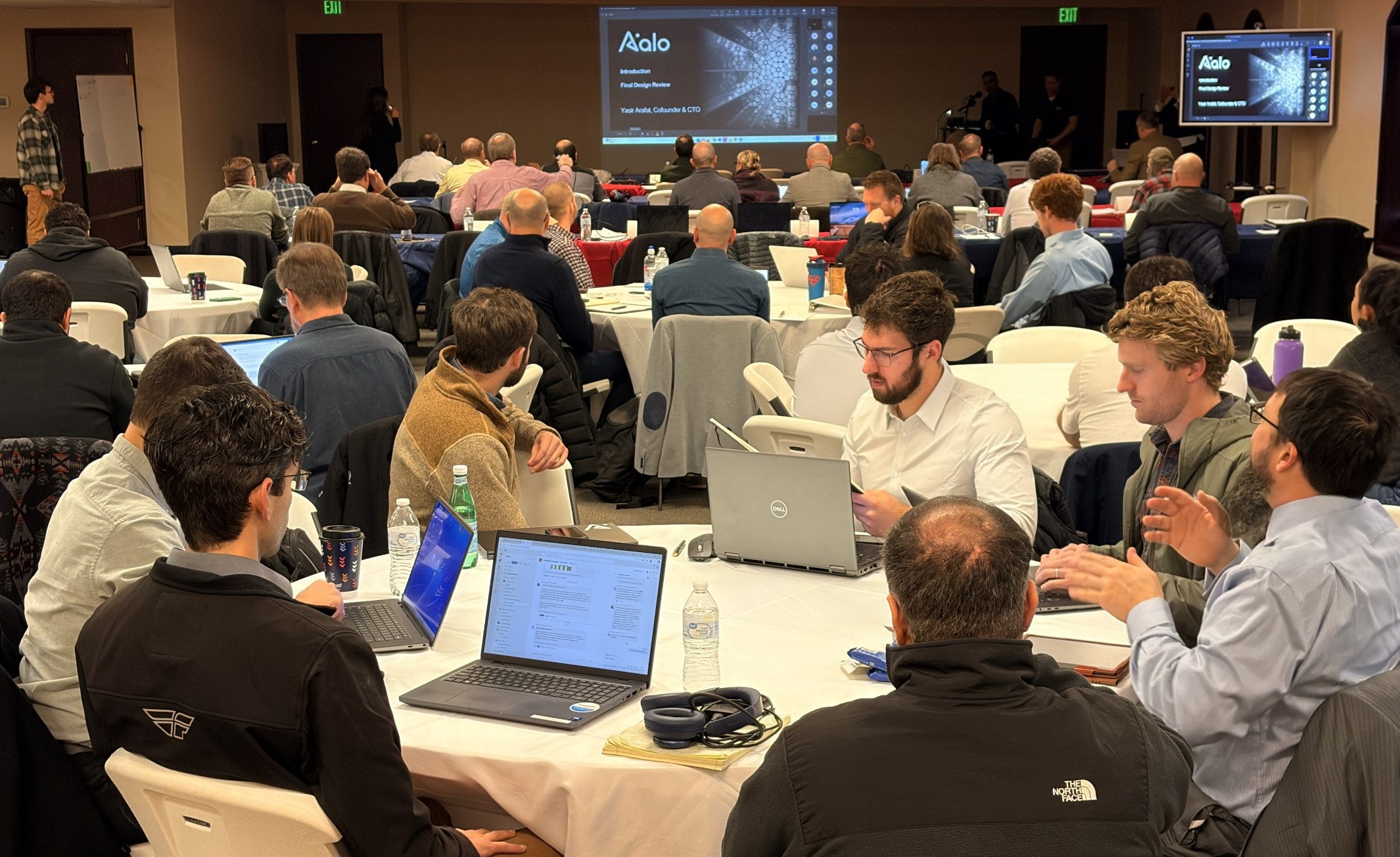
Aalo Atomics has completed their Final Design Review with independent DOE and NRC reviewers. The Final Design Review is one of the stages of the newer DOE regulatory pathway, which differs greatly from the traditional commercial NRC pathway. The steps that remain at this point are construction of the reactor followed by approval of the Documented Safety Analysis (DSA). The DSA establishes the safety basis and operating controls necessary to operate the reactor and verify everything was built as designed. Once the reactor is built and the DSA is approved, Aalo will start making the preparations for initial criticality.
If you’re enjoying the content, please *like* and *restack*
Only takes about 3-5 seconds. Likes and restacks are the primary means of growing on Substack. Thanks for the help, and don’t forget to subscribe!
Antares Receives DOE Preliminary Document Safety Approval for Mark-0 Demonstration Reactor
Antares is in a similar position as Aalo, recently completing their Preliminary Documented Safety Analysis (PDSA). The PDSA certifies that Antares reactor, facility, and planned operations meet standard and expectations of the DOE. With reactor construction of their Mark-0 design currently underway at INL, the company is still on track to obtain initial criticality by the July 4th goal date. Antares goes on to detail future plans with the intent to utilize the same facility at INL to support their electricity producing demonstration in 2027.
COMPLETION OF REVIEW MILESTONES, TENNESSEE VALLEY AUTHORITY CONSTRUCTION PERMIT APPLICATION, CLINCH RIVER NUCLEAR UNIT 1, CLINCH RIVER NUCLEAR SITE
The NRC is calmly celebrating its successful progression through the review process for TVA’s construction permit. The TVA is working to construct a GE Vernova-Hitachi BWRX-300 reactor at the Clinch River Nuclear Site. The milestones have been met ahead of schedule by about a month and are on track for continued success.
The estimated completion date for granting of the construction permit is expected by the end of the year. If ahead of time, we could see the permit granted by September or October.
Fuel and Supply Chain
TX-1 reached two major milestones last week
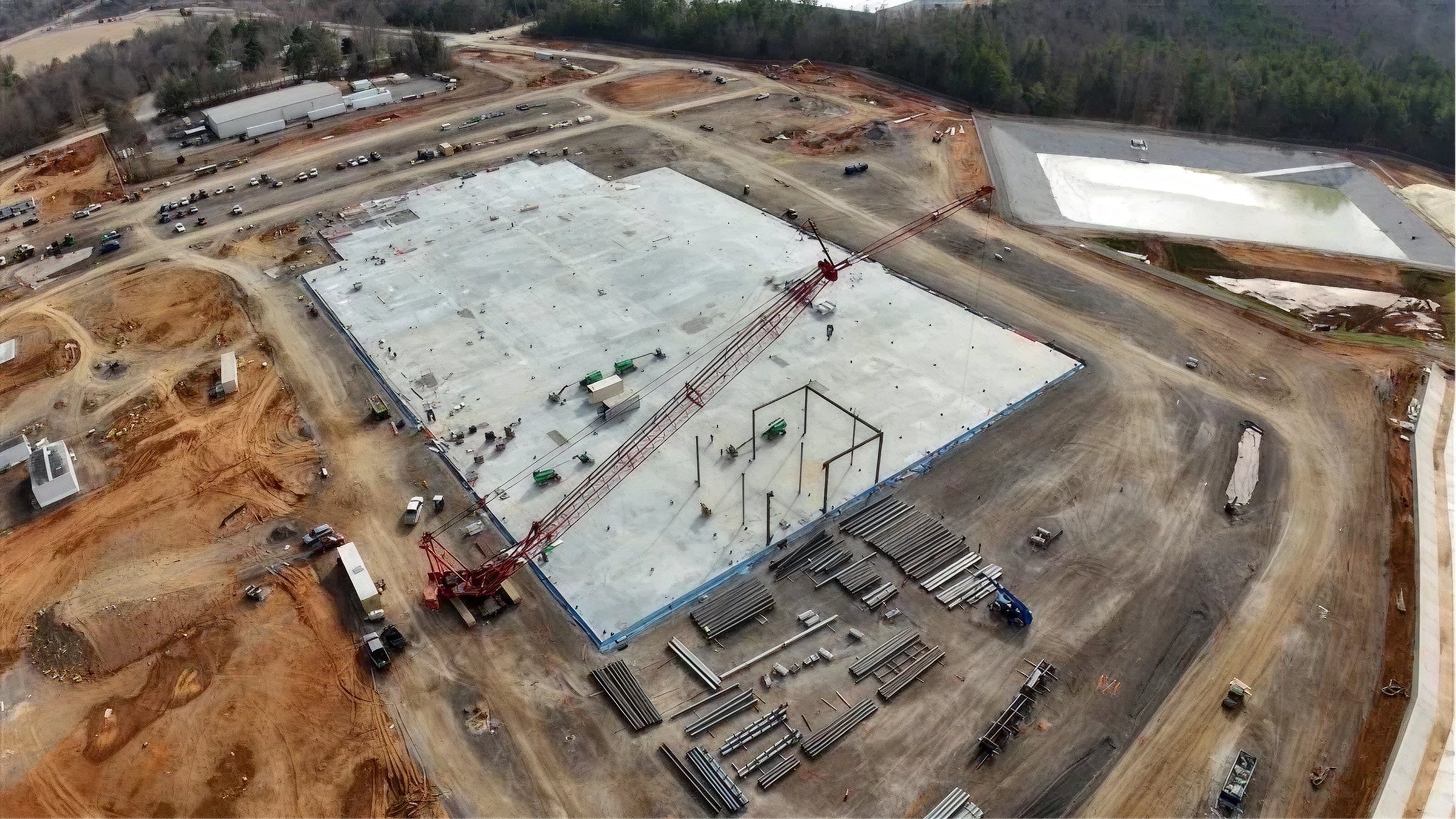
The foundation has recently been completed for the TX-1 fuel fabrication facility. TX-1 will fabricate the unique TRISO-X fuel for use in X-energy’s gas reactors. This will be the first Category II fuel fabrication facility, which means they will be handling fuel enriched up to almost 20% U-235. This is in contrast to the lower enrichment fabrication facilities owned by companies like Westinghouse, but still far from the enrichment levels handled by government for naval nuclear reactor fuel. The facility is expected to produce enough fuel to supply up to 11 Xe-100 reactors per year.
Standard Nuclear Begins Production of Advanced HALEU Fuel and Raises $140 Million in Series A Funding
Standard is another fuel fabricator that will eventually require a Category II fuel fabrication license from the NRC, but for now they are working under DOE regulations. They will likely pursue their commercial license after finishing testing and iteration of their fabrication process.
Standard secured over $140 million in Series A funding to support rapid build-out of new infrastructure. The company expects to be producing over two metric tons per year utilizing multiple sites by mid-2026 as they continue capacity expansion efforts under the DOE’s Fuel Line Pilot Program.
Department of Energy Seeks Hosts for Nuclear Lifecycle Innovation Campuses
The Department of Energy issued a request for information for states to potentially partner with the federal government in hosting nuclear life cycle innovation campuses. These mega sites would host nearly the entire nuclear fuel chain within its fence line, ideally from mining through milling, enrichment, fuel fabrication, reprocessing, and disposition of nuclear waste. The RFI goes on to say that depending on priorities and capabilities, the site could also host advanced reactors, manufacturing, and potentially co-location of data centers.
We think the best part of the RFI is the clarification that the site will host the entire fuel chain, not just the front part. The handling of spent fuel and high-level waste is the part that usually turns state governments off the most. So, in order for them to participate in the economic benefits that would come from hosting a campus like this, they have to be willing to store spent fuel; not just ship it off for someone else to deal with.
U.S. Department of Energy to Provide HALEU for Hermes Demonstration Reactor
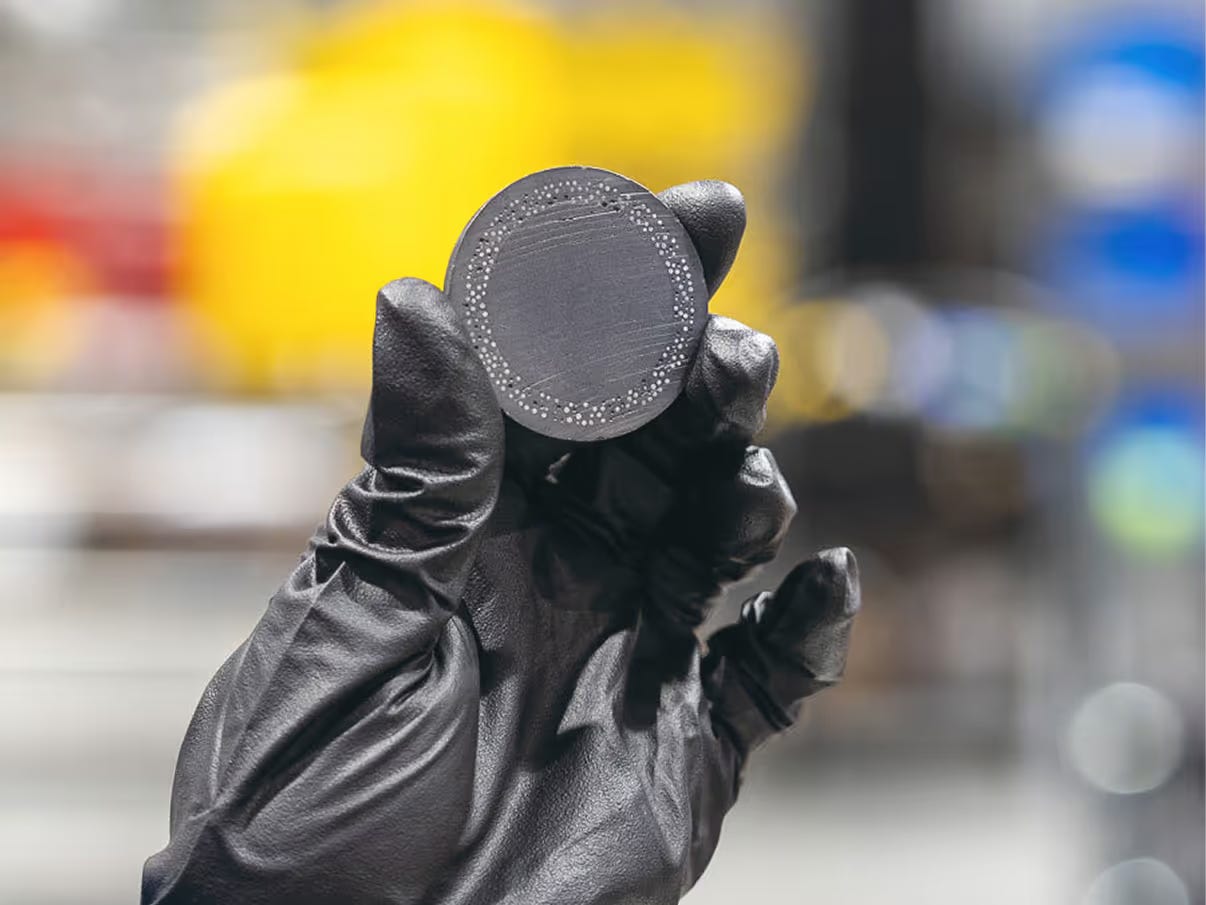
Kairos has completed negotiations with the DOE for securing HALEU from government stockpiles to enable the startup of its first reactor. Kairos was originally selected last year alongside Radiant, Westinghouse, TerraPower, and X-energy to be allowed to start negotiations with the department for securing fuel. This finalized contract with the DOE allows the company to move forward with fuel fabrication in partnership with Los Alamos National Laboratory. The company utilizes TRISO fuel pebbles, but in a form factor that differs from that produced by X-energy and Standard Nuclear.
Policy and Regulation
Trump’s AI deal for Silicon Valley: Build your own nuclear, skip years of regulation
This one is less about the technical details and more about highlighting how fast this administration is looking to go with the construction of a new nuclear energy. Fortune says Trump was discussing tech leaders bringing their own source of power for new data centers and said he assured them the government would deliver “approvals” for nuclear projects in three weeks. It is incredibly unclear as to what this actually means, given most of the timelines are on, at the very least, the scale of months for review and approval of any documents submitted to the NRC. While more remains to be seen about the validity of the president’s comments he made at Davos, the demand for nuclear energy at the federal level is higher than it has ever been.
Congress passes new nuclear funding
While it was a part of a greater bill that included funding for several departments, it is still worth highlighting that there was overwhelming support from both the Senate and the House of Representatives for approving funding for the DOE and the Office of Nuclear Energy. What’s worth highlighting is the multiple billions of dollars that was taken from other parts of the DOE and redirected at nuclear energy projects, including ARDP and Gen III+ programs. These programs have been supporting companies like Holtec, GE Vernova, BWXT, Kairos, X-energy, and TerraPower for several years.
If you’re enjoying the content, please *like* and *restack*
Only takes about 3-5 seconds. Likes and restacks are the primary means of growing on Substack. Thanks for the help, and don’t forget to subscribe!
Nuclear Stocks Surge After Trump Tells Davos “US Going Heavy Into Nuclear”
Near the opening of his time at the podium at the World Economic Forum at Davos, President Trump told the crowd of CEOs and heads of state that the U.S. was “going heavy into nuclear”, sending most of the sector stocks higher in trading early that morning. He did not offer significant depth to the topic of the administration or the country getting further into nuclear energy, but did remark briefly on its safety and cheaper cost to construct compared to the past.
While it is important to acknowledge some of the groundwork for the current nuclear renaissance was laid by the Biden administration, most notably with the awards for enrichment capacity expansion, the Trump administration has been pushing nuclear harder than ever. Energy Secretary Chris Wright, with his nuclear background on the board of Oklo, has also repeatedly pounded the table on the advantages of baseload, clean nuclear energy and has launched repeated initiatives to restart the atrophied nuclear industry.
Something Missing?
Looking for the other major headlines announced this week? Well, they’re probably covered in our other bi-weekly report, the Nuclear Sector Newsletter, that focuses on the publicly-traded side of the nuclear industry. It’s $10/month for coverage of all the public nuclear companies and comes with special reports for quarterly earnings and major announcements. Don't forget the several months of these reports we’ve stacked up for our subscribers to read through as well!
Next weekend’s market-focused report for paid subscribers will include:
BWXT enrichment program update
IMSR letter from CEO
GEV earnings
CR earnings
URG exploration results
AMTM EDF contracts
CCJ Co-60 production
CCJ partners with Tetra Tech
Where is the evidence that it is anymore difficult for the Navy to arrange port calls for nuclear powered vessels than for any other Navy vessel?
For aircraft carriers, the real challenge is the size of the ship and crew. It's a real logistical challenge that is quite different from that of bringing a large cruise ship with a similar passenger count into port.
Submarines have smaller crews, but they are still deep draft vessels that cannot enter many ports because the channel depth isn't sufficient.
My sense is that many of the most commercially interesting ports are not going to have any real difficulty allowing nuclear ships to enter - as long as there is some kind of payment system that would make up for the income ports obtain from selling fuel to visiting ships.
Propulsion plants using passive safety and achieving EPZs that are limited to the ship will also be helpful.
Excellent roundup of the fuel fabrication milestones. The TX-1 facility progress alongside Standard's capacity expansion is exaclty what the supply chain needs to hit those July deadlines. I've been tracking HALEU production constraints for awhile and it's wild to see 2+ metric tons/year becoming realistic - thats the kind of throughput that actually enables multiple reactor deployments simultaneously instead of everything bottlenecking on fuel availability.