
NSN #33 - Multiple Nuclear Regulation Wins as the Industry Partners Up
Nuclear Sector Newsletter: Stock returns, earnings, and news

It’s a new week, which means we have a burning desire to change the format of the newsletter, yet again. Instead of something completely new though, we’ve simply decided to copy the format of the News Rundown.
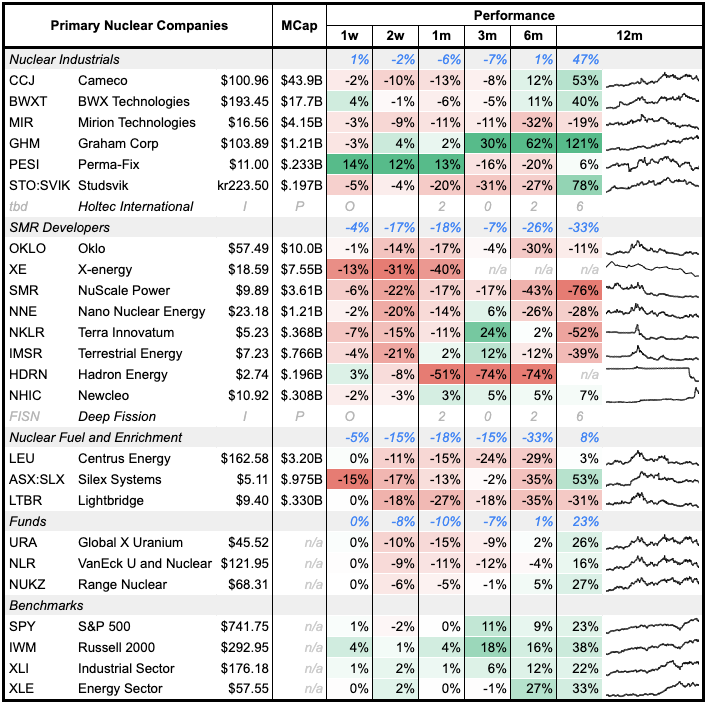
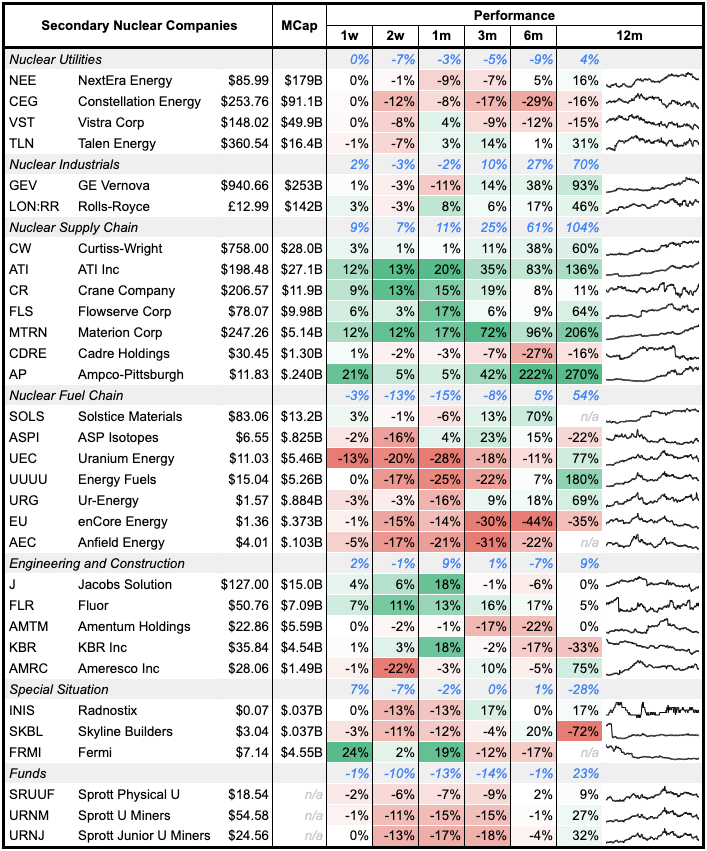
Similar sections with reactor talk at the beginning, followed by discussions of the fuel and supply chain, then wrapped up with regulations and industry stories. Only real difference is we included stock return charts at the beginning and swapped out the “Something Missing?” section for ETF breakdowns and earnings reports.
Our free subscribers can still expect to enjoy the same News Rundown they’re used to seeing every other weekend. This opposite-weekend newsletter covers similar topics, but only ones related to publicly-traded nuclear industry companies
These past couple weeks saw earnings reports from Graham and X-energy, with X-energy in particular providing significant granularity to their recent progress and roadmap ahead.
Studsvik received approval for their next generation reactor fuel modeling software, allowing reactor owners to now prepare for higher enrichment levels up 8%, Oklo executed an engineering capacity-related acquisition and received another approval for their Aurora reactor in Idaho, Deep Fission gave a significant cut to their IPO valuation, and ATI extended their advanced material agreement with BWXT.

Reactor R&D and Fleet Work
U.S. Department of Energy Approves Preliminary Documented Safety Analysis for Aurora Powerhouse at Idaho National Laboratory
The announcement regarding Oklo’s Aurora-INL project brings us to update the tracker to its latest status for the DOE Reactor Pilot Program:
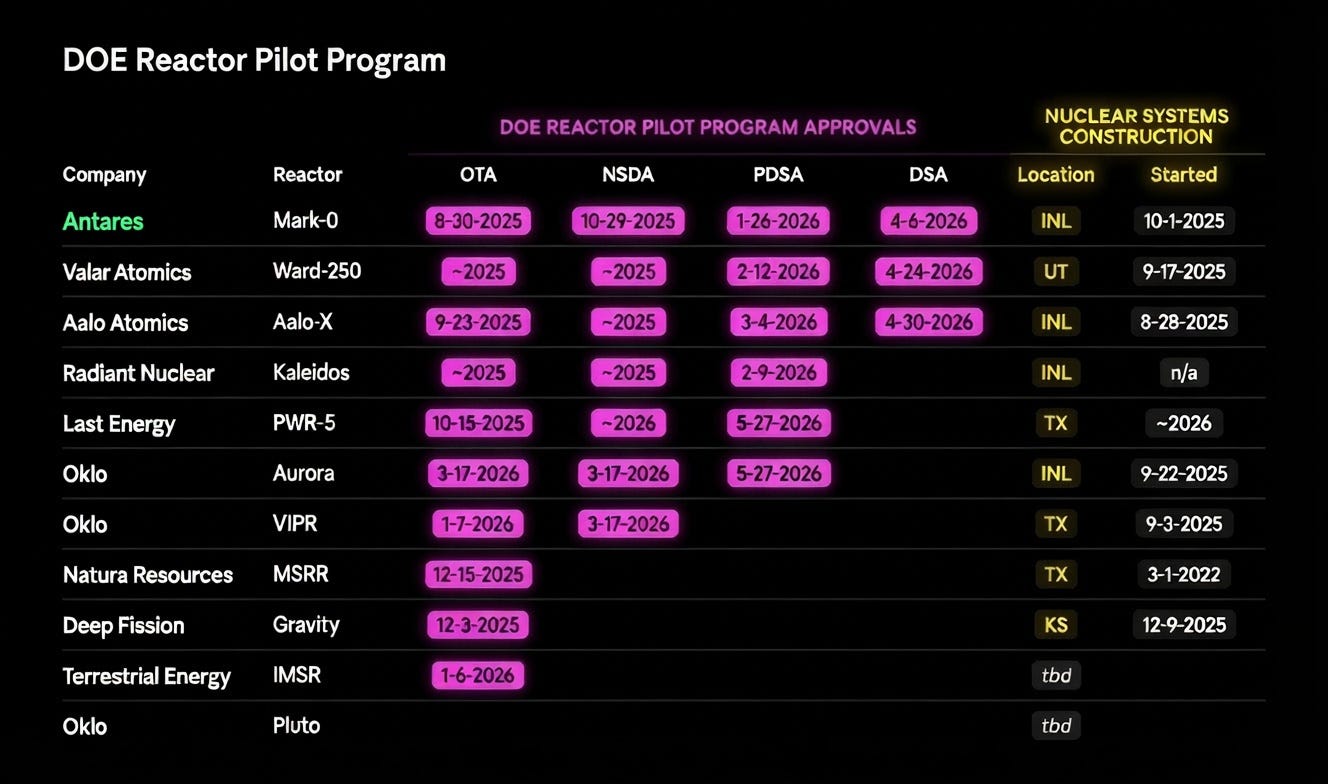
Multiple officials from the DOE have remarked that they anticipate multiple reactors to go critical before the July 4th deadline. So far, Antares has gone critical, and we will likely hear announcements in the upcoming week or two from Valar and Aalo for achieving the same. Radiant has previously stated they are targeting criticality before July 4th, as has Oklo’s VIPR project under their Atomic Alchemy subsidiary at the Groves site in Texas.
There is growing skepticism around Radiant and the VIPR projects, as neither of them have seen their DSA approved yet. The concern for reaching the goal goes twice for VIPR as they have also not seen their PDSA either. The Aurora project has not been discussed as a July 4th candidate, so it was surprising to see their PDSA announcement before VIPR.
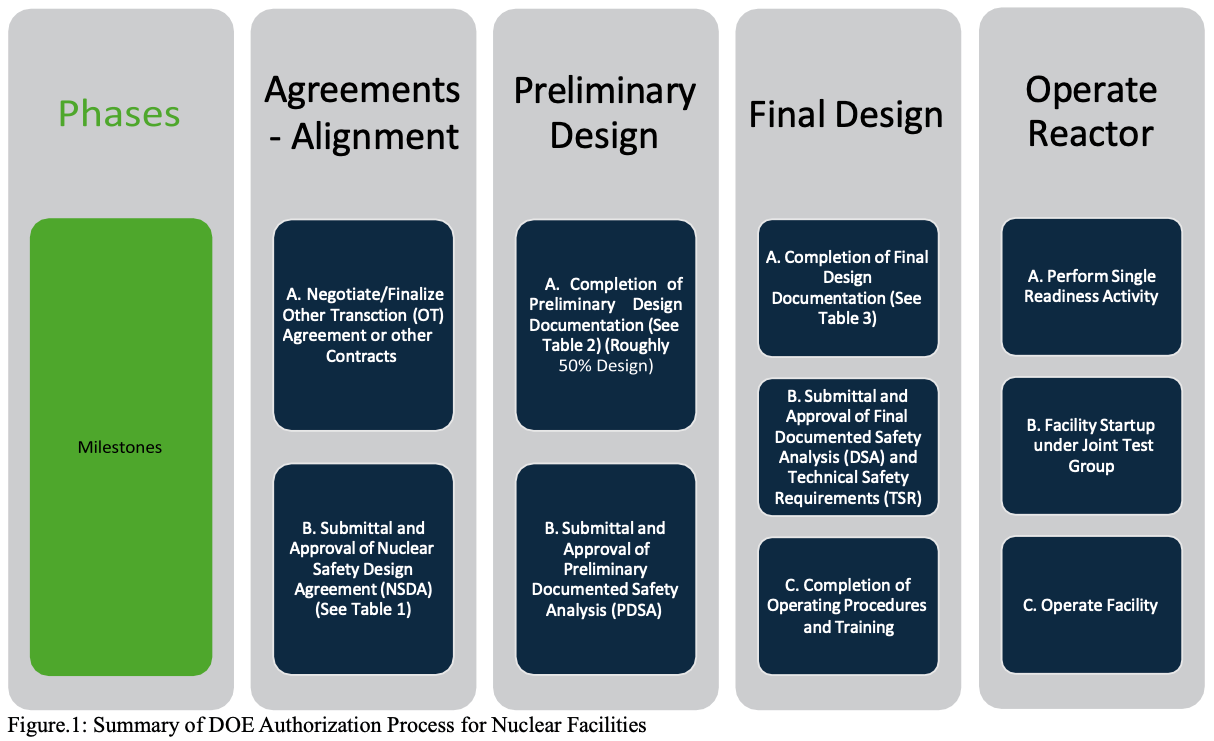
We’ve discussed each of these stages at length in the past, but here’s a refresher for those that are new to the mess of acronyms from DOE-STD-1271:
“The purpose of the Nuclear Safety Design Agreement (NSDA) is to gain agreement on design requirements, safety analysis approach, regulatory engagement process, applicable regulatory requirements, and to identify the key safety decisions for the design. Additionally, it discusses the designer’s planned application of codes and standards included in the Code of Record.”
“The purpose of a Preliminary Documented Safety Analysis (PDSA) is to provide a comprehensive and preliminary assessment of the safety aspects of a nuclear facility or activity. The Contractor submits the PDSA to DOE for review and approval once the necessary analyses and system design detail has been performed (nominally the 50% design completion mark) and is provided in the format outlined in the NSDA. The significance of the PDSA is that it represents the first formal opportunity to look at the proposed design, safety case and associated SSC performance and classification requirements in an integrated manner.”
“The purpose of the final documented safety analysis (DSA) is to establish the safety basis and operating controls necessary to safely operate the facility and validate that the identified design has met those criteria. The DSA is required to be developed by the Contractor, approved by DOE and implemented prior to the initiation of the readiness activities. It incorporates the as built facility“
